Southern China for Digital Nomads: Between Wonder and Survival

Southern China for Digital Nomads: Between Wonder and Survival

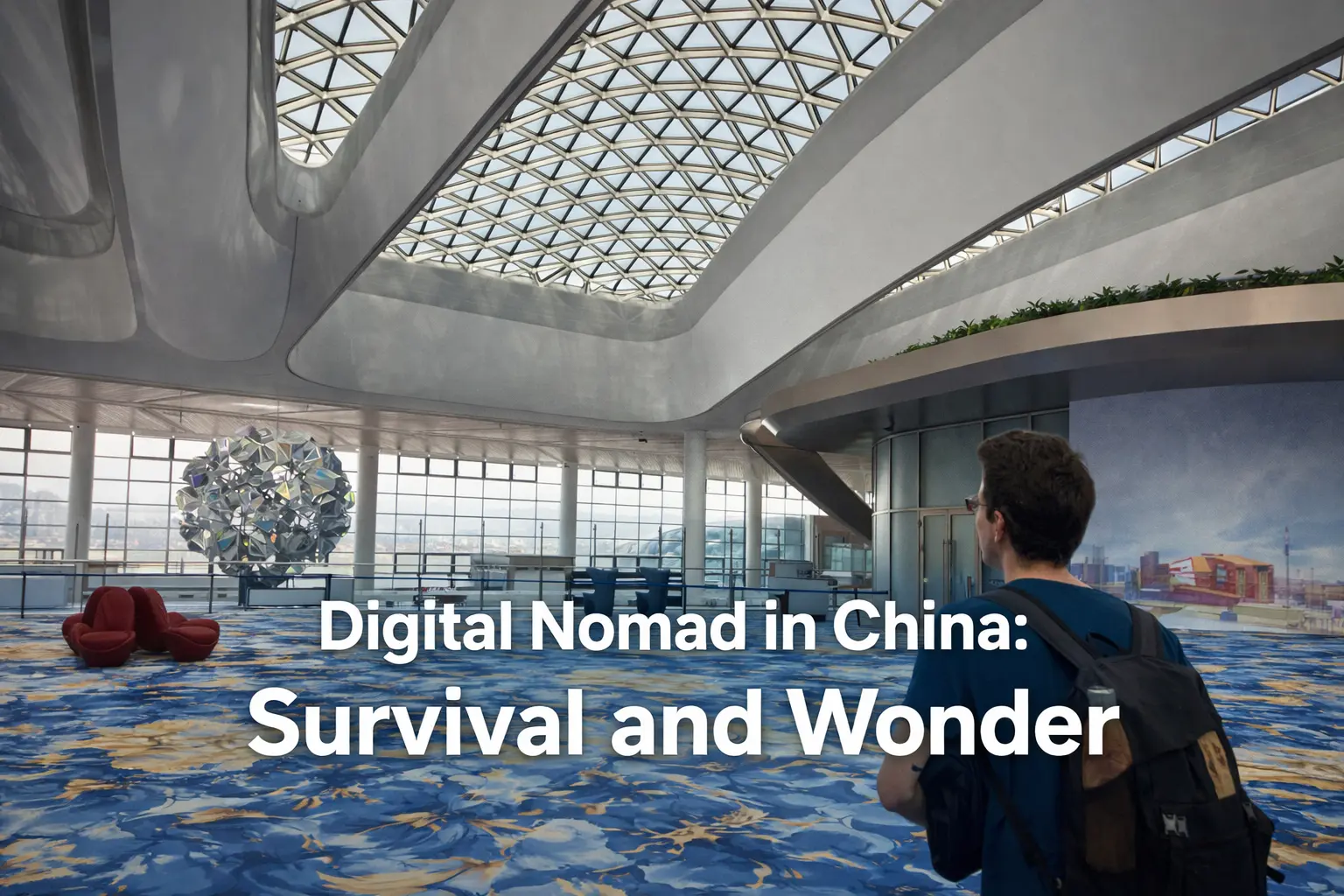
Southern China is not an obvious destination for digital nomads. When you think of digital nomadism, you imagine Bali, Lisbon, or Chiang Mai. Not Shenzhen, Guangzhou, or Huizhou. And yet, I spent three weeks exploring these three Chinese cities, one week in each, and it’s an experience I won’t soon forget!

This article is obviously not a tourist guide, but rather an account of what it’s really like to live and (try to) work in Southern China when you have the freedom to choose your workplace. With the struggles, the surprises, and especially that Great Firewall we’ll be talking about.

[Read More]

Hathoris: Bringing Back the Simplicity of HiFi Systems in the Digital Age

Hathoris: Bringing Back the Simplicity of HiFi Systems in the Digital Age

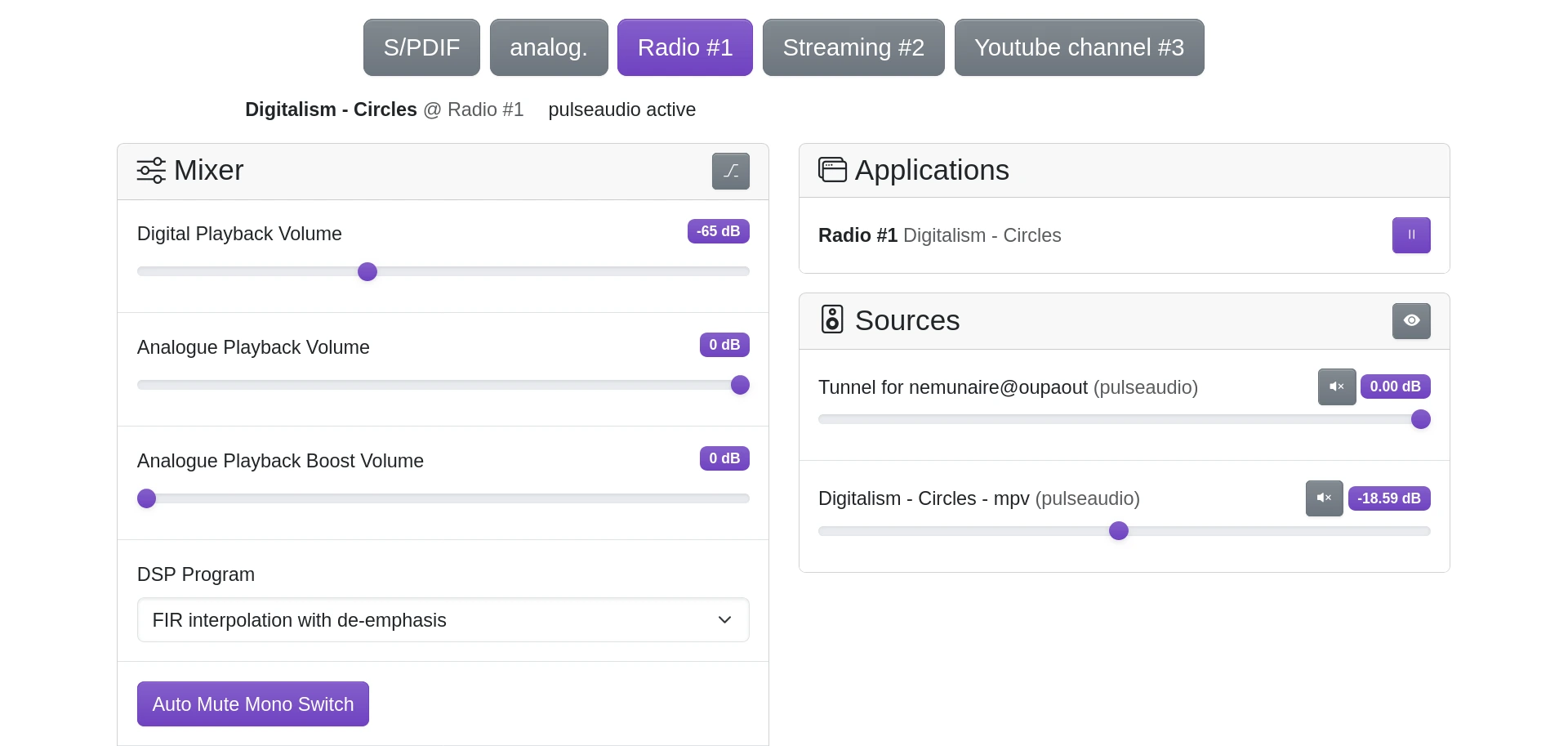
Remember when listening to music was as simple as pressing a single button? Those days when you’d walk into a room, flip a switch on your amplifier, and instantly be surrounded by your favorite tunes? There was something magical about that simplicity—no computers to boot up, no apps to navigate, no complex digital interfaces to wrestle with.

The Problem with Modern Audio Systems

As our music collections went digital and streaming services became the norm, we gained incredible access to virtually unlimited music libraries. But something was lost along the way: simplicity.

[Read More]

Master Your AI: Explore Local AI with OVH for Just 1 Dollar

Master Your AI: Explore Local AI with OVH for Just 1 Dollar

Today, generative AIs meet many uses, and it would be a shame not to take advantage of them. However, in the age of the GDPR, it’s legitimate to question the exposure of customer or partner data when relying solely on AI providers whose data processing remains opaque.

Having myself participated in the construction of one of these new virtual assistant services, I offer here a simple guide to starting up a machine and evaluating the performance of your AI application, or to offering your employees access to sovereign AI, with the aim of easily comparing the different models available.

[Read More]

Cloud-init to deploy LocalAI in the cloud in 5 minutes

Cloud-init to deploy LocalAI in the cloud in 5 minutes

It’s possible to use generative AI without sharing your data with companies or states that raid our data.

The world of free software is full of applications for evaluating and using generative AI. After extensive testing, I present here the cloud-init file for deploying your own LocalAI instance in under 5 minutes.

Why LocalAI?

LocalAI is a free software application designed to offer a local, self-hosted alternative to AI service providers. The application features an API compatible with that of OpenAI. The idea is to be able to replace calls to OpenAI from any existing application in the blink of an eye: simply change the domain to which the API points.

[Read More]

Duplicate window display on 2 screens with X.org

As an engineering school teacher and technical lecturer, I’m often asked to give demonstrations, in addition to the classic slide show. Like any organized lecturer, I can’t do without my notes, elapsed time, etc., which are given to me by presenter screen software. This kind of software requires an extended display, i.e. the computer screen and the video projector display 2 different things.

The disadvantage of demonstrations is that the application window you want to show cannot be displayed on both screens at the same time. I’ve tried to solve this problem, in particular to avoid having to do demos while craning my neck, as the window necessarily had to be on the video projector screen, which is really not comfortable.

[Read More]

Unveiling Whiteout Files: Do you know how file deletions are handled between layers of a Docker image?

Unveiling Whiteout Files: Do you know how file deletions are handled between layers of a Docker image?

Union file systems are a mechanism for merging two or more file systems, to present them unified, under a single mount point for the user.

The main idea behind this mechanism is to be able to alter the contents of the first file system (e.g. the contents of a CD-ROM) by writing all changes (additions, deletions, modifications) to the second (which could be a disk partition, a USB stick, …).

[Read More]

Unify HTTP requests and GRPC calls on a single domain for more flexible configuration: example with Woodpecker

Unify HTTP requests and GRPC calls on a single domain for more flexible configuration: example with Woodpecker

I installed the continuous integration service Woodpecker, to replace DroneCI, which the company that bought it decided to bury. As Woodpecker is a fork of the latest free version of Drone, its use is broadly similar.

However, the teams have taken different directions on certain aspects, and communication with agents/runners, which used to be via websockets, is now carried out in Woodpecker using the GRPC protocol.

The solution proposed by the Woodpecker documentation is to use 2 domains: one will be used for the web interface and the REST API, the second will be used for GRPC. Is this really necessary?

[Read More]

Using Waveshare e-ink screens without Raspberry Pi

Using Waveshare e-ink screens without Raspberry Pi

When it comes to e-ink displays, Waveshare is a rare manufacturer that allows you to buy displays of any size. Advertised as ESP32, Arduino and Raspberry Pi compatible, they are in fact compatible with any development board exposing the SPI protocol.

Since Raspberry Pi boards have become hard to find in recent months, we’ll take a look in this article at how to use another Linux-based board to run a Waveshare display.

[Read More]

Gamification of a Linux system administration course

Gamification of a Linux system administration course

System administration isn’t something that’s obvious to everyone, and it’s a subject that, when it’s more to do with the basics of networking and Linux, can seem a lot more daunting than learning about the latest trendy technologies (Docker, Terraform, Kubernetes, etc.).

Also, with the bombardment of information and easy access to computer content and tutorials often more interesting than “classic” lectures, students are less and less attentive, present or participating.

[Read More]

Self-hosting: for a decentralized and responsible Internet

Self-hosting: for a decentralized and responsible Internet

In an idealized world, we would all be free to access any service, made available by a community motivated by the common good rather than by the penurious enrichment of a few. However, we don’t live in that world.

Today, everything is monetized: the smallest product or service only exists if it brings in enough money, without regard for the common good. The apparent gratuity of digital services is often accompanied by a more discreet but lucrative counterpart: the exploitation of our personal data.

[Read More]